Stainless Steel Pipe Fittings
Date:2026-07-02View:180Tags:OCTG pipe,Seamless steel pipe manufacturer,Casing and tubing
Common Types of Stainless Steel Fittings:
* Elbows: Used to change the direction of pipes, the most common being 90° and 45° elbows, allowing pipes to bypass obstacles or adapt to building structures.
* Tees and Crosses: Used for pipe branching. Tees connect three pipes in a "T" shape, while crosses are used for cross-shaped connections.
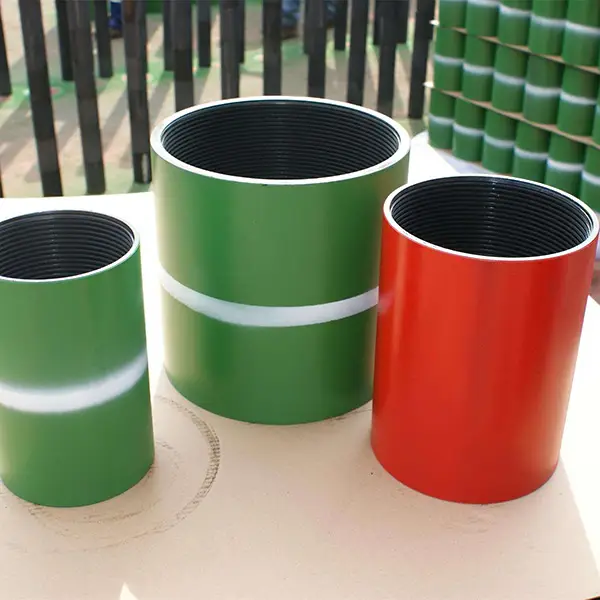
* Straight Fittings (Pipe Couplings): Used to connect two straight pipe sections, they are the basic components for pipe extension.
* Connectors and Transformers: Includes hook connectors, internal or external threaded connectors for connecting hoses, enabling the connection of pipes to equipment or other types of pipe fittings.
These fittings are typically made of 304 or 316 stainless steel. 316 stainless steel, due to the addition of molybdenum, has stronger corrosion and rust resistance, making it particularly suitable for environments with extremely high requirements for cleanliness and corrosion resistance, such as marine engineering or chemical industries.
Evolution of Connection Technology: From Welding, Press-fitting to Self-locking
The application value of stainless steel pipe fittings is largely determined by their connection methods. Different connection technologies determine the safety and construction efficiency of the fittings in different scenarios.
Traditional methods such as welding and threaded connections, while widely used, require advanced construction techniques and ample space, and have limitations in certain scenarios. For example, welding poses a fire hazard, and threaded connections risk loosening under vibration.
Press-fitting and grooved connections are among the most mature connection methods in the construction industry. Press-fitting fittings use specialized tools to clamp the fitting to the pipe, combined with an O-ring seal, offering advantages such as leak-proofing, pull-out resistance, and vibration resistance. However, this connection is one-time use and cannot be disassembled. Grooved (clamp) connections, on the other hand, use clamps and rubber sealing rings for fastening, and their sealing performance improves with higher fluid pressure, making them a preferred technology for liquid and gas pipeline connections, widely replacing flange and welding connections.