DIN 1629
Date:2026-01-30View:556Tags:Drill pipe,Sprial steel pipe,Boier tube
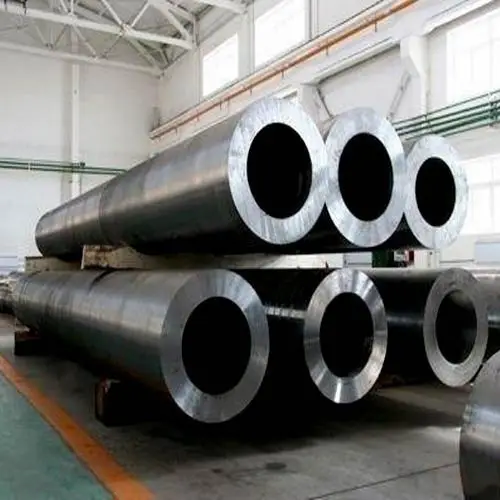
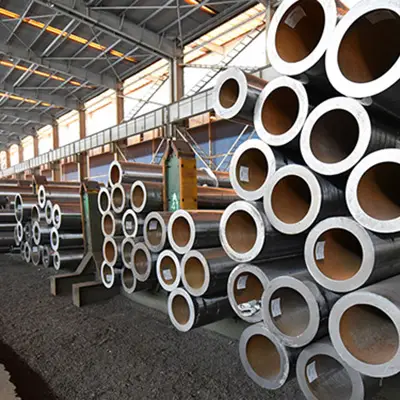
DIN 1629 stands for "Seamless round steel tubes, weldable fine-grained steel for specific applications."
The core of this standard is the specification of a series of seamless steel tubes with excellent weldability and good cold-forming capabilities. These tubes are manufactured from fine-grained steel (usually killed steel), whose refined grain structure significantly improves the material's strength, toughness, and low-temperature performance, enabling them to withstand more demanding working conditions. DIN 1629 steel tubes are not suitable for applications under high-temperature creep conditions; their design focus is on pressure resistance and structural functionality at room temperature and medium-low temperatures.
The standard mainly covers the following aspects:
Materials and Grades: The standard defines several steel grades (historically including St 37.0, St 44.0, St 52.0, etc., later harmonized with European standards). These grades correspond to different chemical compositions and lower limits of mechanical properties, such as tensile strength, yield strength, and elongation, providing users with clear selection criteria.
Manufacturing Process: Explicitly requires that the steel pipes be produced using seamless processes, such as hot rolling, hot extrusion, or cold drawing. This ensures uniform anisotropic properties across the pipe cross-section, eliminating the potential weak point of welds, thus resulting in excellent performance in terms of pressure resistance, fatigue resistance, and impact resistance.
Dimensions and Tolerances: Extremely precise specifications are made for the outer diameter, wall thickness, and permissible deviations of the steel pipes. Strict tolerance control is fundamental to ensuring the assembly accuracy of the piping system, achieving reliable sealing, and uniform stress distribution.
Technical Requirements: These include the chemical composition of the steel pipes, mechanical properties at room temperature (tensile test), technological properties (such as flattening test, flaring test, or bending test), and hydrostatic testing or non-destructive testing that may be required according to the order. These tests collectively ensure the overall quality and reliability of each steel pipe.
Inspection and Delivery: Detailed specifications are provided for testing frequency, sampling methods, certification, and documentation requirements (such as certificates of conformity), ensuring quality traceability throughout the entire process from production to delivery.
Application Areas: Silent Support for Modern Industry
DIN 1629 seamless steel pipes, due to their superior overall performance, have become the "unsung heroes" in many key fields:
Hydraulic and Pneumatic Systems: Used in the manufacture of hydraulic cylinder barrels, high-pressure oil pipes, and pneumatic pipelines, where high pressure resistance, high dimensional accuracy, and good surface finish are crucial.
Mechanical Manufacturing and Equipment Engineering: Used as structural components, drive shafts, and load-bearing sleeves in machine tools, construction machinery, printing machinery, and other equipment.
Automotive Industry: Used in the manufacture of steering systems, shock absorber components, and other safety components requiring high strength and fatigue resistance.
General Piping Engineering: Suitable for applications requiring higher precision than ordinary fluid transport, such as compressed air systems, lubrication systems, and the transport of non-extremely corrosive media in certain chemical plants.
Steel Structures and Special Applications: Widely used in frame structures or moving parts requiring high loads and high precision.