Steel Pipe Surface Treatment
Date:2026-08-13View:134Tags:Galvanized pipe,Casing and tubing,RHS section
Steel pipe surface treatment is a crucial process determining its corrosion resistance lifespan and coating adhesion; its quality can influence the final product's lifespan by up to 50%. The core objective is to remove surface contaminants, obtain a clean surface, and form a suitable roughness (anchor pattern) to ensure a strong bond between the subsequent anti-corrosion layer and the surface.
Steel pipe surface treatment mainly falls into three categories, often used in combination in actual production:
I. Comparison of Core Treatment Methods
Mechanical Treatment
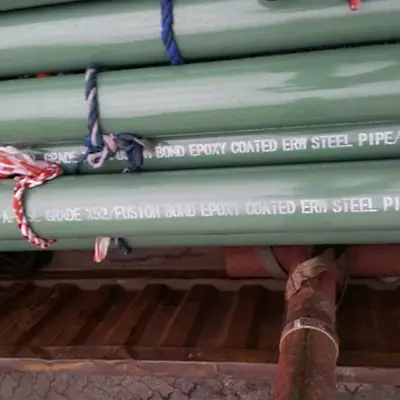
Shot Blasting: Utilizing high-speed abrasives (steel shot, steel grit) for impact cleaning, this is the most ideal and efficient method. It thoroughly removes rust and scale, achieving a uniform roughness of 40-100μm. It can treat both inner and outer walls and is the mainstream process for pipeline corrosion protection. It is particularly suitable for epoxy and polyethylene coatings, significantly enhancing coating adhesion.
Tool-Based Rust Removal: Using hand or power tools such as wire brushes and grinding wheels for polishing. The effect is limited, and it cannot form an effective anchor pattern. It is only suitable for small-area, low-requirement repairs or auxiliary treatments.
Chemical Treatment
Pickling: Immersion in chemical solutions (such as sulfuric acid and hydrochloric acid) to remove scale and rust. It provides good cleanliness but leaves shallow anchor patterns and is environmentally polluting and costly. It can be used as a supplementary treatment after sandblasting or for pipe fittings with complex shapes that are difficult to mechanically process.
Phosphating/Passivation: Performed after pickling, it forms a chemical conversion film (phosphate film or chromate passivation film) on the surface, improving surface stability and coating adhesion. It is usually used as an enhancement process after chemical cleaning or mechanical rust removal, especially for preparing high-quality anti-corrosion coatings.
Auxiliary Processes
Cleaning: Using solvents and emulsions to remove surface oil, grease, and dust. It cannot remove rust and scale. It is a necessary pretreatment step before rust removal.
II. Key Quality Indicators: Cleanliness and Roughness
Cleanliness Grade: For important anti-corrosion coatings (such as epoxy and vinyl coatings), steel pipe surfaces are typically required to achieve a near-white grade (Sa2.5). This means the surface should be virtually free of visible grease, dirt, scale, and rust.
Roughness (Anchor Pattern Depth): Appropriate roughness is crucial for the coating to adhere firmly to the steel pipe. Generally, an Rz of 40μm to 100μm is required, but the specific value depends on the coating type.
III. Example of Composite Processing
High-quality steel pipe surface treatment typically employs a multi-step composite process. For example, a complete process flow might include: cleaning and degreasing → shot blasting (to Sa2.5 grade) → phosphating → rust-preventive coating, and finally, anti-corrosion spraying.